
Pulaski County Release Records Explained
A local adult arrest in Pulaski County usually leads to New River Valley Regional Jail, not a stand-alone county jail. NRVRJ is a regional authority that serves Pulaski and several nearby jurisdictions. The Pulaski County Sheriff's Office may make an arrest or transport a person, and a Pulaski court may issue the order, but NRVRJ normally holds the booking and marks the local custody event released. That split matters. A call to the wrong office can produce a correct answer about one record and no answer about the actual jail departure.
Released means that one custodian ended control. It does not always mean the person went home. Bond, recognizance, time served, dismissal, sentence completion, parole, and conditional release can put a person in the community. A transfer to the Virginia Department of Corrections, another jail, the U.S. Marshals Service, or ICE also ends the NRVRJ episode. The destination field or release authority is therefore as important as the date. Pulaski County release records should be read as a chain of events, not as a simple free-or-confined label.
A person who leaves NRVRJ may drop from the current roster even when another agency immediately assumes custody.
Pulaski County Inmate Release Types
The recorded release term tells what ended the local custody episode. It should be copied exactly. Personal recognizance is a court-authorized pretrial release without a secured bond. Time served means the custodial term credited by that agency ended. Parole is conditional community release under state authority, while probation is court-ordered supervision that may follow custody or begin without a prison term. A detainer is a request or authority from another jurisdiction that can keep the person confined or send the person elsewhere.
| Release entry | What it means | Next record to check |
|---|---|---|
| Bond or recognizance | Pretrial custody ended under court conditions | Pulaski court docket and NRVRJ Release Date |
| Time served or completion | The recorded custodial term ended | Release record and any probation order |
| Parole or conditional release | The person entered the community under stated terms | VADOC locator, release order, and District 28 |
| Transfer | Custody moved to another agency | Receiving jail, VADOC, BOP, USMS, or ICE |
| Dismissal or nolle prosequi | A court ended or declined the charge as recorded | Signed court order plus jail release event |
Virginia jail rules add a practical safeguard. Under 6VAC15-40-1090, staff must positively identify the person, verify authority to release, check for holds, document the event, and settle property and funds. A judge's order can therefore appear before the jail posts the completed release. That delay does not by itself show an error.
Fields in Pulaski Release Records
A complete Pulaski County release record can answer who left, which agency released the person, when the custody change took place, and what authority or destination was recorded. The public NRVRJ lookup is thinner than the underlying jail-management record. Its observed result columns include the inmate name, booking number, permanent ID, date of birth, and Release Date. A targeted records request can seek the extra fields that explain the event.
| Field | What it shows |
|---|---|
| Name and date of birth | Identity controls used to avoid a false match |
| Booking and permanent IDs | The specific custody episode and the jail's longer-term person identifier |
| Admission and release date or time | When the recorded jail episode began and ended |
| Release category or authority | Bond, sentence completion, court order, discharge, or another stated basis |
| Destination or receiving agency | Community release or transfer to another custodian, when disclosable |
| Court and case number | The docket or order tied to the custody event |
| Booking photograph | The routine intake image linked to that booking, when releasable |
Not every record includes every field. Release Date alone proves only that the NRVRJ database marked that booking released. It does not show why the person left or where the person went. Pair the public result with a court order, release log, or receiving-agency record when the destination matters.
Request Pulaski County Release Records
NRVRJ is the best first custodian for its booking, release entry, and adult booking photograph. The jail receives mail at P.O. Box 1067, Dublin, VA 24084, and lists 540-643-2000 as its main line. Its official FOIA statement did not publish a detailed fee schedule in the research, so no fixed price should be assumed. Virginia FOIA permits reasonable actual charges. Ask for an estimate before costs exceed a limit chosen by the requester.
- Identify the person with a full legal name, date of birth or jail identifier, and a narrow booking date range.
- Ask for existing admission and release records, the actual release date and time, the recorded authority or category, and any disclosable destination.
- Request an electronic copy and an advance cost estimate. Do not ask staff to create a new opinion about whether someone is free.
- If NRVRJ does not hold the sought record, send a focused request to the agency that created it, such as Pulaski County, a court clerk, or VADOC.
- Compare the response with the court order or receiving-agency record before drawing a conclusion about community release.
Virginia Code § 2.2-3704 sets the usual five-working-day response framework. A response may provide records, redact or withhold material under cited law, report that none exists, or invoke more time in writing. The period is not a promise that every record will arrive within five days. Neither NRVRJ nor VADOC published a verified offender-file retention term in the research.
When Pulaski County itself has the record, its FOIA notice lists mail, email, fax, telephone, and in-person channels. The county may route the request to another public body. A narrow request for a known document and date range is faster to assess than a request for every record tied to a common name.
Pulaski Release Records and Expungement
Open-record law does not make every correctional file public. Virginia Code § 2.2-3706 addresses criminal record disclosures, including routine adult booking photographs, while allowing limits for investigative, imprisonment, and supervision records. Expunged or sealed material is not released through ordinary FOIA when the cited law blocks dissemination. Juvenile matters also follow protected channels and do not belong in an adult released-inmate search.
Virginia's expungement framework was scheduled to change on December 1, 2026. A request or publication decision should use the version in force on that day. Under the law in effect when the Pulaski research was completed, common petition grounds included acquittal, dismissal or nolle prosequi, and identity misuse, subject to the statute's terms. A vanished web entry can reflect lawful sealing, an expired display window, or a system change. It does not prove that the former record was false.
What if the online result is gone? Ask the proper custodian whether an existing, releasable record remains. Do not copy a court retention rule onto the NRVRJ web tool because the jail publishes no retention period for released results.
Find Pulaski County Released Inmates
Begin with strong identity data. Collect the legal name, likely spelling or alias, date of birth, approximate booking date, and court locality. A photograph alone is not enough. Pulaski County released inmates can appear in several systems, and common names can join the wrong person to the wrong case.
- Use the official NRVRJ lookup and select Include released inmates. Search by name and date of birth or by a known booking, permanent, state, county, FBI, or ICE number.
- Check Virginia Jail VINE for the same person and agency. A status or saved alert is event evidence, but VINE is not a permanent archive.
- Search the correct Pulaski General District or Circuit Court system. Read bond, disposition, sentencing, appeal, and revocation entries as separate events.
- If the person received a state sentence or supervision, use the VADOC locator. For federal or immigration custody, use the agency-specific locator.
- When the systems do not resolve the event, request the existing release record from NRVRJ or the actual custodian.
The official NRVRJ Inmate Management Lookup visibly includes the released-person control and Release Date column. It is not a chronological feed. The Pulaski County 24 hour release list process explains how to verify a same-day event without assuming the lookup is complete.
The live form can be reviewed before a search:
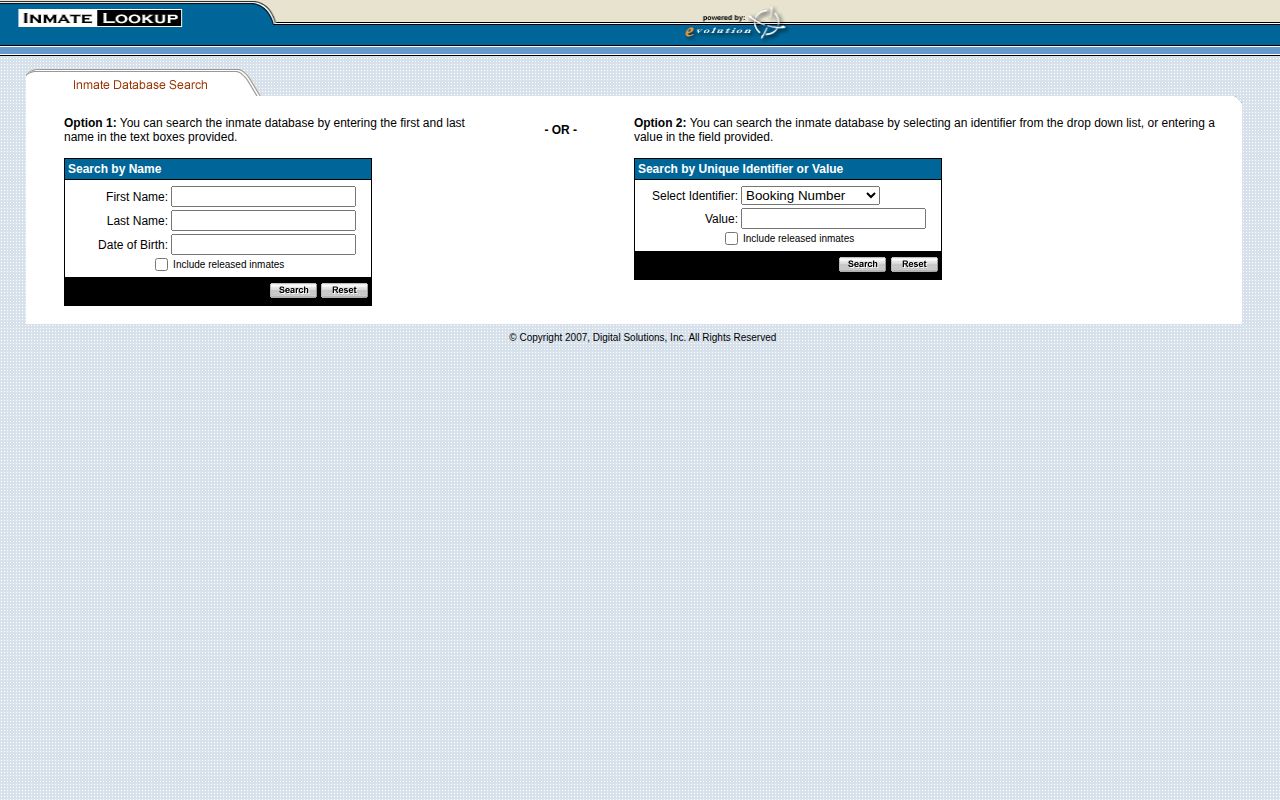
The screenshot shows why the checkbox is essential: a normal current-custody query can omit a booking that the jail has already marked released.
VADOC Pulaski Release Record Search
The VADOC Inmate and Supervisee Locator is the correct state route after a prison commitment or for many people on state probation or parole. Search the exact name and VADOC number when known, inspect plausible matches, and compare the identifiers shown. Preserve the displayed wording. An incarceration result points to state custody. An active supervisee result supports community release under supervision. Absence is not a discharge certificate.
| Search or result element | How to use it |
|---|---|
| Name | Use exact and plausible spelling, then compare all likely matches |
| VADOC number | Use the agency identifier to narrow a common name |
| Facility or supervision status | Distinguish incarceration from release into community supervision |
| Date information | Read the label and context before treating a date as projected or completed |
| Daily update warning | Recheck or contact VADOC when precision matters |
VADOC's official locator is updated daily, but the department warns that data may be inaccurate or dated. An older discharge may require direct confirmation or a VADOC records request. The search form is shown here:
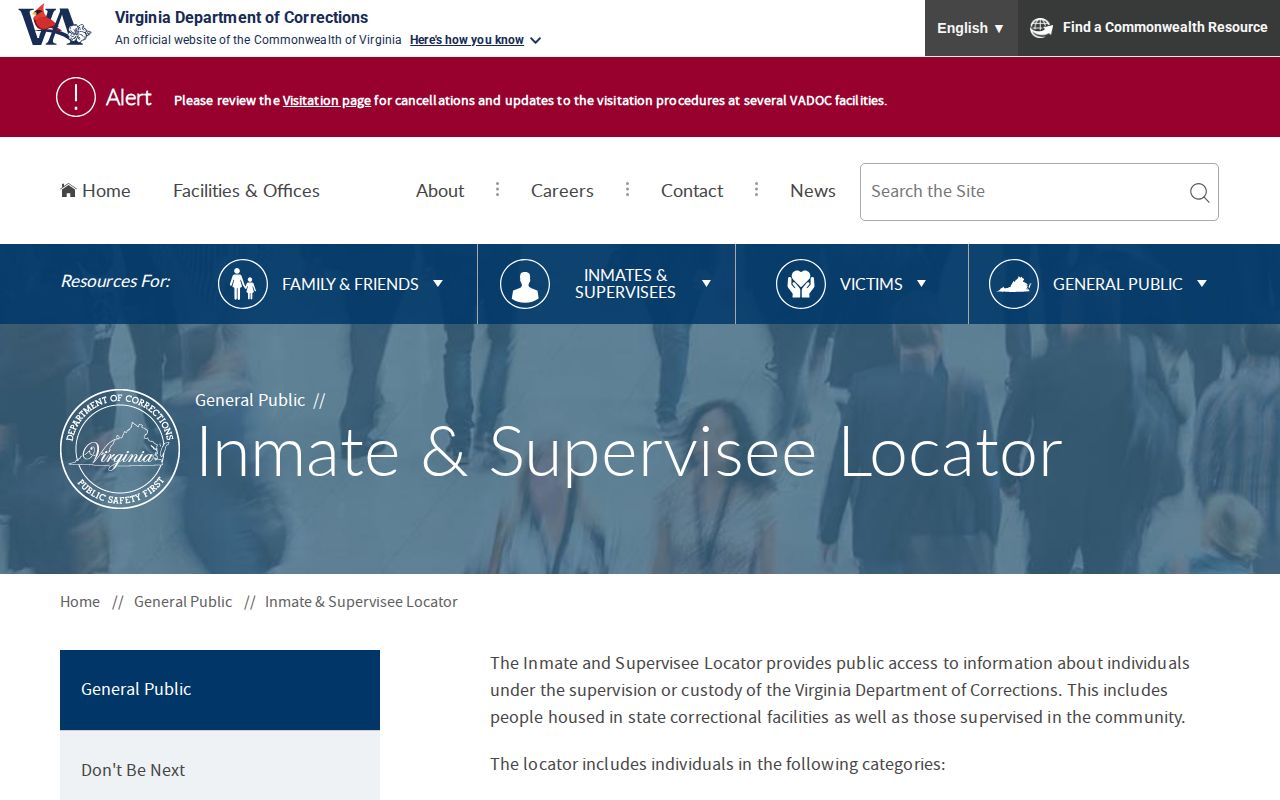
This state form does not replace the NRVRJ record for a local booking. It answers a different custody question.
Pulaski Court Orders and Releases
Pulaski court records show the legal event behind many releases. General District Court handles misdemeanors, traffic matters, early felony stages, and many initial bond proceedings. Circuit Court handles felony trials, appeals from General District Court, and expungement petitions within its authority. Search the correct court and read a signed order when the docket summary is unclear.
A local schedule makes the timing easier to understand. Pulaski General District Court lists video jail attorney advisements and bond hearings at 1:45 p.m. Monday through Wednesday. A family may learn that bond was granted before NRVRJ completes identity checks, verifies the order, and clears other holds. The court event explains why release is expected. The NRVRJ Release Date or release log establishes when the facility event was completed.
The Virginia Find a Case gateway routes users to the proper system. Circuit criminal cases require selection of the specific circuit rather than one universal statewide circuit index. A disposition proves the court outcome, not the exact moment the jail opened the door.
Pulaski Bond Release Categories
NRVRJ distinguishes Personal Recognizance, Unsecured, Secured, and Ineligible for Bail. The court controls whether bond exists and sets its terms. Once a person has been committed, jail staff cannot lower bond, arrange recognizance, or recommend a bondsman. A posted bond is the legal basis for pretrial release, but it is not proof that physical processing has ended.
The official NRVRJ bonding instructions should be checked for the accepted local process. Release staff must still verify authority and search for holds. A court order, a payment event, and the jail's Release Date can therefore carry different timestamps while all are accurate. Bond also does not end the charge. Court dates and release conditions may remain in force.
Does bond mean the case was dismissed? No. Bond releases a person from pretrial custody under set terms. The Pulaski court docket records what later happened to the charge.
Getting Home After Pulaski Release
NRVRJ sits about six-tenths of a mile down Newbern Road from Route 100 and Interstate 81 Exit 98. The research found no published jail-gate bus stop, family waiting point, fixed release door, or daily release hour. A planned pickup should be confirmed with the jail instead of relying on a court time or projected date.
Pulaski Area Transit's New River Express connects Pulaski, Dublin, and Fairlawn and lists stops in Dublin. Its published list does not name NRVRJ. The service can form part of a trip, but a rider must confirm the first and last mile. Do not promise that a bus will meet someone at the facility gate.
Release planning should also account for a transfer. A VADOC, ICE, USMS, or another-jail destination means the person will not be waiting in Dublin for a ride, even though NRVRJ may show a Release Date.
Pulaski Release Account Funds
NRVRJ publishes one narrow rule for money left in an inmate account. At release, the person may choose to have the remaining funds mailed or to pick up the balance in person. The source does not publish an equivalent general rule for all personal property. Confirm property questions separately and do not extend the account-balance choice to clothing, documents, or other items.
Pulaski Post-Release Edovo Access
The jail also links an Edovo post-release access process. A former user of the in-custody Edovo system can follow that route to request continued account access. It is a rare local continuity service. It does not confirm custody, legal status, or a release date.
- Discharge
- The formal end of the custodial or supervision term recorded by the responsible agency.
- Time served
- A release basis stating that credited custody satisfies the term being enforced.
- Detainer
- A request or authority that may cause another agency to assume custody.
- Expungement
- A court process that can restrict access to qualifying records under state law.
Pulaski Post-Release Supervision Systems
Two local supervision systems should not be confused. VADOC District 28 in Radford administers state probation and parole for Pulaski, Montgomery, and Floyd counties and the City of Radford. New River Valley Community Corrections and Pretrial Services has a Pulaski office and serves the 27th Judicial District. It handles pretrial supervision and local community-corrections work, not state parole.
A VADOC locator result or District 28 confirmation can show that a person is in the community under state supervision. A Pulaski court order states the imposed probation term. The local community-corrections office is the better route for its own pretrial or local probation program. The detailed Pulaski County probation and parole record process separates these authorities and explains discharge, violations, and Board records.
Pulaski Release Alerts and Transfers
Virginia Jail VINE covers local and regional jail events, including the NRVRJ route. Registration occurs on the matching person and agency record. Phone registrants create a PIN and enter it when an automated call arrives. VINE may report release, transfer, escape and return, or death. Updates stop after release, so preserve an alert and seek the durable NRVRJ record.
State-prison notices now use VADOC NAAVI, not local Jail VINE. A transfer from NRVRJ to VADOC can require a new registration. BOP's locator is for federal prison custody and retains many former prisoner results with a release date. Federal pretrial custody may instead require the federal court or U.S. Marshals Service because USMS has no comparable public historical name search.
An ICE detainer changes the meaning of release. ICE describes a detainer as a request for notice and up to a 48-hour hold beyond ordinary release so DHS can assume custody. If that occurs, the NRVRJ episode ends through transfer rather than community release. Use the ICE detainee locator and verify the destination. The presence of an ICE Number field on the jail search does not prove an ICE contract or a particular transfer.
Pulaski Released Versus In Custody
Each official system answers a limited question. Use the record that matches the custodian and the point in time. A no-result should trigger the next source, not a quick claim that a person is free.
| System | Best use | Key limit |
|---|---|---|
| NRVRJ lookup | Current regional custody and released bookings when the box is checked | No stated 24/72-hour window, cadence, or retention term |
| NRVRJ release record | Actual local release time, authority, and destination fields | Must be requested when the public result is thin |
| VADOC locator | State incarceration or active community supervision | Daily updates can still be incomplete or dated |
| Pulaski court record | Bond, disposition, sentence, appeal, or revocation authority | Does not prove the jail processing timestamp |
| BOP or ICE locator | Federal prison history or current civil immigration custody | Neither is a general Pulaski jail search |
For high confidence, match at least two authoritative records. The best pair often combines the custody agency's release entry with the court or receiving agency that explains the authority and next destination.
Pulaski Regional Release Record History
NRVRJ first housed prisoners on April 27, 1999, after participating local facilities closed. A major expansion was completed in 2010. That history explains why Pulaski does not operate a separate adult county-jail roster and why the regional authority owns the released-inclusive lookup. The Pulaski County Sheriff's Office remains important for sheriff-created arrest, incident, transport, and court-security records, but it is not the adult detention facility.
The distinction prevents a common search error. A person arrested in Pulaski may have a sheriff record, a Pulaski court case, and an NRVRJ booking. If a state sentence follows, VADOC becomes the legal corrections authority. Each record documents one link. None should be used as a substitute for all the others.
Pulaski County Release Record Facilities
The facility map includes physical custodians, record agencies, supervision offices, and federal systems that can receive or document a person after a Pulaski County custody event. These are not seven local jails. Their roles differ, and each page routes the search to the right official record.
- New River Valley Regional Jail is the regional adult jail and primary local release-record source.
- Pulaski County Sheriff's Office holds sheriff-created arrest, incident, and transport records, not the NRVRJ database.
- Virginia Department of Corrections records state prison custody, discharge, and much adult state supervision.
- VADOC Probation and Parole District 28, Radford serves Pulaski County after qualifying state releases.
- Virginia Department of Juvenile Justice, Court Service Unit 27, Pulaski is a protected juvenile channel, not an adult lookup.
- Federal Bureau of Prisons facilities nationwide are relevant only to federal prison custody.
- ICE detention network and ODLS are relevant when civil immigration custody follows a jail transfer.
Start with the agency that physically held the person, then follow the documented release destination. That method keeps a transfer from being mislabeled as freedom.